

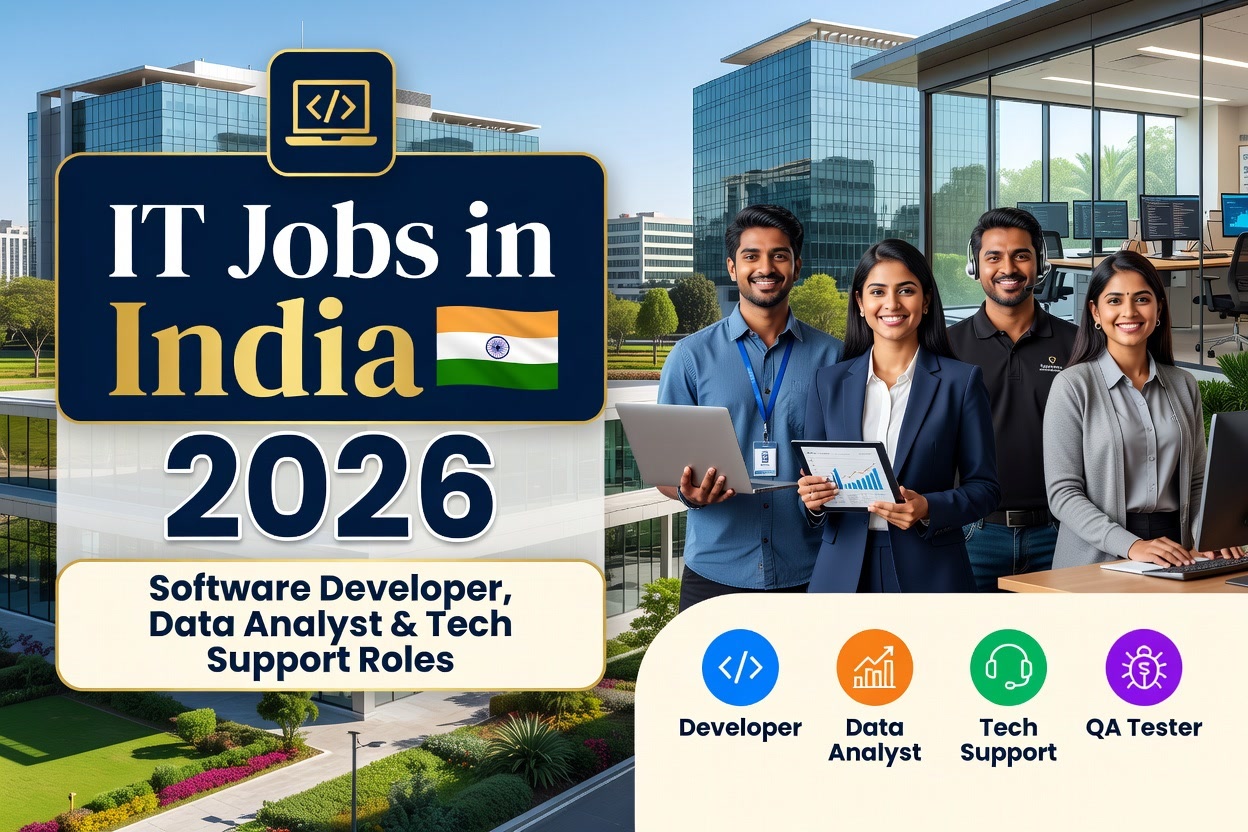
New IT job openings in India are open for 2026 in software development, testing, data analysis, cloud support and IT helpdesk work. Hiring is active in Bengaluru, Hyderabad, Pune, Chennai, Noida, Gurugram, Mumbai, Kolkata, Kochi, Coimbatore, Ahmedabad and Bhubaneswar.
These roles suit B.Tech, BCA, MCA and B.Sc (Computer Science or IT) graduates, as well as diploma holders with strong practical skills. Large IT service companies, product startups and Global Capability Centres (GCCs) offer PF, health insurance, laptops, hybrid work options and structured training.
This guide explains the salary, eligibility, role types, skills, documents and step-by-step application method for IT jobs in India in 2026.
IT Jobs in India 2026 — Software Developer, Data Analyst & Tech Support
Full-time IT roles in coding, testing, data analysis and technical support. Freshers hired through campus and off-campus drives with paid training.
Quick Summary
Below is a quick snapshot of IT jobs in India — roles, salary, skills and what you need to apply — followed by the full details.
Monthly Salary
Figures are typical gross monthly pay, worked out from yearly CTC offers at IT service firms, startups and GCCs. A ₹3.6 lakh CTC works out to about ₹30,000 a month before PF and tax. Confirm the exact figure in your written offer letter before joining.
Salary by Type of IT Employer
IT jobs in India come from very different kinds of companies. Fresher pay and work style differ between them:
| Employer Type | Typical Roles & Monthly Pay (Fresher to 3 yrs) |
|---|---|
| 🏢 Large IT service companies | Associate engineer, tester, support — ₹28,000 – ₹55,000 |
| 🌐 Global Capability Centres (GCCs) | Developer, data analyst, cloud engineer — ₹45,000 – ₹90,000 |
| 🚀 Product startups | Full-stack, backend, frontend developer — ₹35,000 – ₹80,000 |
| 🛠️ IT support & managed services | Helpdesk, desktop support, network admin — ₹16,000 – ₹35,000 |
| 🏫 Small software & web firms | Web developer, PHP / WordPress developer — ₹15,000 – ₹35,000 |
Living Costs in IT Hub Cities
A single IT employee’s typical monthly costs in Bengaluru, Hyderabad or Pune — so you can see what you keep from your salary:
Hybrid work lets many employees share flats a little farther from the tech parks, where rent is lower. Some companies also give a home internet allowance.
What Do IT Professionals Do?
- Write, review and fix code in languages like Java, Python, JavaScript or C#.
- Test software, report bugs and check that each release works as planned.
- Clean data, build Excel and SQL reports and make dashboards in Power BI or Tableau.
- Solve laptop, email, network and login problems for users as IT support staff.
- Monitor servers and cloud systems on AWS, Azure or Google Cloud.
- Join daily team meetings and update task status in tools like Jira.
- Follow company data security and client confidentiality rules.
Why Choose IT Jobs in India?
Your Career Growth Path
IT careers move fast when your skills keep growing — many tech leads started as trainees:
Associate Engineer→
Software Engineer→
Senior Engineer→
Tech Lead→
Engineering Manager
Skills That Help You Get Hired
Who Can Apply — Eligibility
IT jobs in India mostly look at your degree and your practical skills. The realistic eligibility checklist looks like this:
| Criterion | Requirement |
|---|---|
| Age | No fixed age limit; most fresher drives take candidates from the last two passing years |
| Education | B.Tech / BE, BCA, MCA, B.Sc (CS / IT / Maths); many firms ask for 60% marks with no active backlog |
| Experience | Freshers welcome; internships and personal projects add strong weight |
| Language | Good written and spoken English for client calls and emails |
| Skill test | Online aptitude and coding test, then technical and HR interviews |
| Background check | Education, past employer and identity check by a verification agency |
| Documents | Aadhaar, PAN, degree and semester marksheets, resume, photos |
Documents Commonly Required
- Aadhaar card and PAN card.
- 10th, 12th, degree certificate and all semester marksheets.
- One-page resume with skills, projects and GitHub or portfolio name.
- Internship or course completion certificates, if any.
- Relieving letter and salary slips (for experienced candidates).
- Recent passport-size photographs.
- Bank account details and old UAN for PF.
Note: No genuine IT company asks you to pay for a “training-cum-placement” program, a laptop deposit or a background verification fee before joining. Fake offer letters using big IT company names are common — always check that the offer came from an official company email after a real interview.
Step-by-Step: How to Apply
Ready to apply?
Send a resume with real projects and never pay for an IT job offer.
Common Mistakes to Avoid
- Paying a “placement guarantee” institute or agent for an IT job.
- Listing ten programming languages on the resume without real knowledge of any.
- Copying projects from the internet and failing to explain them in the interview.
- Ignoring aptitude and English practice and focusing only on coding.
- Joining without checking the bond, notice period and CTC break-up in the offer letter.
Common Interview Questions
- Explain one project you built and the problem it solved.
- What is the difference between a list and an array, or a primary key and a foreign key?
- Write a simple program to reverse a string or find duplicates in a list.
- How would you help a user who cannot log in to their system?
- Are you comfortable with relocation and rotational shifts?
Frequently Asked Questions
Can I get an IT job without a B.Tech degree?
Is it free to apply?
What is the salary of a fresher software developer in India?
Which skills get IT jobs fastest in 2026?
Do IT companies hire non-IT graduates?
Conclusion
IT jobs in India offer strong pay growth and steady demand for candidates who keep their skills sharp. Build real projects, apply the right way, and never pay for a job.
